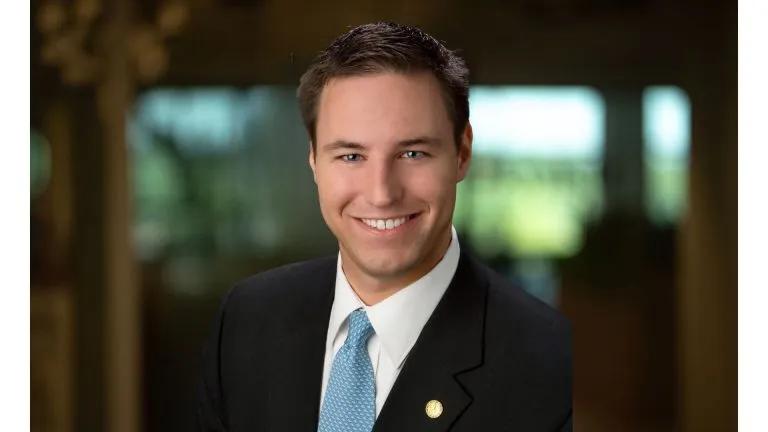
Director Richard (Dick) McCarthy is a seasoned leader combining financial expertise, service commitment, and innovative thinking to drive meaningful impact at Lynch. A proud Georgetown University graduate with a degree in Finance and Accounting, Dick has built an impressive portfolio of professional credentials, including Program Management Professional (PMP), Certified Defense Financial Manager (CDFM), Certified Government Financial Manager (CGFM), and Certified Public Accountant (CPA). We recently sat down with Dick to explore his career journey, the experiences that shaped his leadership, and what continues to fuel his drive for both professional excellence and personal growth.
How did you get started in consulting? How did you end up at Lynch?
I’ve always been fascinated by the intersection of business and government—and at Georgetown, it was hard to ignore. Being in the nation’s capital, surrounded by some of the world’s largest companies and the Dulles Tech Corridor, I was constantly exposed to the unique dynamics of the public and private sectors working together.
While at Georgetown, I was active in Hilltop Consultants, a student-run organization that provided pro bono consulting services to nonprofits across D.C. That experience gave me an early, hands-on understanding of consulting and how it can make a real impact.
In the summer of 2005, between my junior and senior years, I interned with PwC’s Washington Federal Practice, supporting the assurance (audit) team. I joined PwC full-time after graduation and spent the next 17 years there as the business grew from under 100 employees when I started to more than 17,000 when I left. That journey included the spinoff of PwC’s Public Sector business and its acquisition by Veritas Capital, which became Guidehouse.
After several years in a private equity–owned environment, I realized what I valued most about my PwC experience—the partnership model. It fostered long-term investment in people, professional development, and firm culture, and created a sense of shared purpose. People wanted to build their careers there because they worked alongside the owners—and could aspire to become one themselves.
I had known Lynch Consultants for nearly a decade through our work in the industry and always admired the firm’s reputation for quality, integrity, and long-term commitment to its people and clients. When I spoke with Pat about joining to lead our new DLA FIAR BPA, it was immediately clear that Lynch’s culture and vision aligned perfectly with my own values—and that it was a place where I could make a tangible impact.
Was there a defining experience early in your career that reshaped how you view your impact as a consultant and leader?
As I mentioned earlier, my early career experiences really shaped the consultant I’ve become—and one of them, in particular, reframed how I think about supporting clients and building a business.
On literally my first day at PwC in the summer of 2006, I was asked to join a proposal response effort. At the time, our Federal Practice was still relatively small—just a few years out from PwC’s non-compete with IBM ending—and we were very much in growth mode. Survival and expansion were part of the culture, and every person who joined understood that business development was everyone’s responsibility.
That proposal experience was unique—but it shouldn’t have been. I got an early crash course in how the capture process works, what it takes to write a winning proposal, and how success depends on a true team effort. What struck me most was how proposals “leveled the playing field.” Associates, Managers, Directors, and Partners all rolled up their sleeves and worked side by side under tight deadlines. Titles didn’t matter—insight and effort did.
That experience taught me to speak up, collaborate across levels, and contribute confidently, no matter my role. And it made an impression that has stayed with me throughout my career.
It was especially rewarding when we won that contract. The effort was massive—around 20 people involved, including a former Air Force Surgeon General who served as our proposal lead. After the award, I received my first “tombstone” placard with a copy of the proposal cover and the win announcement, with my name highlighted. It wasn’t extravagant, but it symbolized something important—the idea that every contribution matters. It’s a small memento I still keep today as a reminder of what teamwork, ownership, and shared purpose can achieve.
What advice would you give to someone just starting out in this industry? Or someone who’s experienced but adjusting within the current market?
Act like an owner, and remember that no job is too small. Whether it’s staying late to staple handouts (yes, I’ve done that with Pierce on the G-INV project!) or picking up dinner for the team, never see any task as beneath you. People notice that attitude—it earns respect, builds trust, and sets the foundation for lasting success
Which skill sets do you think are most resilient with the rise of AI? What do you look for when you are hiring in terms of AI skills that coincide with financial management?
Consulting is, at its core, a people business. Success requires a balance between technical expertise and strong interpersonal skills—the ability not only to analyze data but also to engage with clients and build trust.
While the fundamentals of financial management—credentials like the CPA, CDFM, or CGFM—remain important, they’re no longer enough on their own. What truly stands out today is intellectual curiosity and the ability to connect the dots between emerging technologies and client needs.
I look for people who understand both the macro trends shaping the industry and the tools themselves—AI, automation, analytics, and process mining, for example—and who can help clients determine which technologies will create the greatest impact in their unique environment. The most resilient professionals are those who blend financial acumen with curiosity, adaptability, and the confidence to translate technology into real-world value.
When you are not busy with work, what do you do for fun? Do you have any exciting plans for the holidays or new year?
My wife, Rachel, and our two-year-old son, William, keep us plenty busy outside of work. While “work-life balance” sounds great in theory, I think for us it’s more about fitting in life around two busy careers—Rachel works full-time as a lobbyist in the powersports industry, so our schedules can get hectic.
We both enjoy running and recently completed our first marathon together, which was an incredible experience. I’m already trying to convince her to sign up for another one soon! Over the holidays, we’re looking forward to some family time, a little rest, and hopefully a few more miles together—this time at a more relaxed pace.
Amy Hauser, Marketing and Communications
Bridging financial strategy and operational innovation.